
The Art and Science of Reading Form
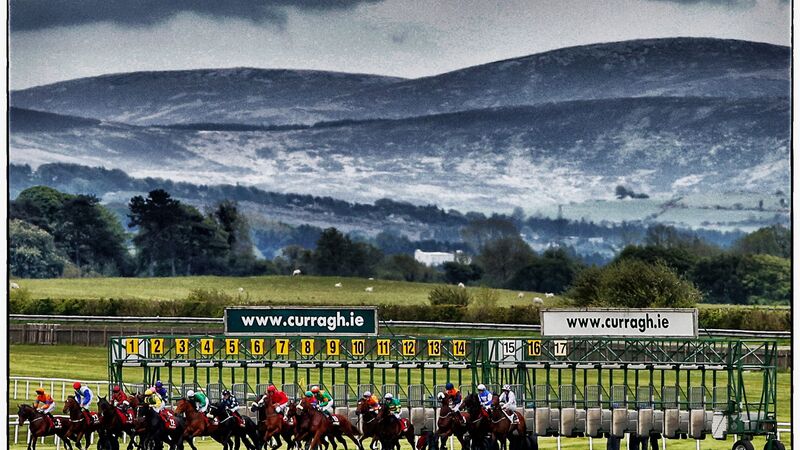
Growing up in Naas, horse racing wasn't just a hobby—it was the family trade. My father worked at the Curragh, and Saturday afternoons meant studying the Racing Post together, learning to see what the numbers and symbols actually meant.
Fifty years later, the sport has changed dramatically. Online exchanges, algorithm-driven models, high-frequency betting—the modern racing landscape would be unrecognisable to my father. But the fundamentals of form analysis remain remarkably constant.
Let me share what those decades have taught me.
The Form Figures: More Than Just Numbers
Every race result is distilled into a single digit (1-9 or 0 for 10th or worse). A horse's recent form might look like this: 32-1421
This tells you the horse finished 3rd, 2nd, and 1st in its last three runs, then 4th, 2nd, and 1st before that. The hyphen indicates a break (usually between seasons).
But form figures alone tell you almost nothing. A horse that finished 4th in a Group 1 at Ascot has achieved more than one that won a maiden at Downpatrick. Context is everything.
What to look for:
- Class of race (Group races, Listed, handicaps, maidens)
- Quality of the opposition beaten
- Distances and going conditions
- Tracks (left-handed vs. right-handed, flat vs. undulating)
- Time since last run
The Weight of Class
Horse racing is a hierarchy. At the top are Group 1 races—the Derbies, the Arcs, the Champions Stakes. Below that, Group 2 and 3, then Listed races, then handicaps of various levels, then maidens.
The golden rule: A horse dropping in class is immediately more dangerous than its form figures suggest. Conversely, a horse stepping up faces a stiffer challenge.
I once backed a horse at 12/1 in a modest handicap. His form read poorly—several middling finishes, nothing exciting. But I noticed those finishes were in races two classes higher. Dropped to the correct level, he won by six lengths.
Conversely, horses "on the upgrade" often get found out when they step up. A dominant maiden winner can look ordinary against experienced handicappers.
Going Preferences: Not All Horses Are Created Equal
"Going" refers to ground conditions: heavy, soft, good to soft, good, good to firm, firm. Most horses have preferences.
Some thrive in the mud. Others need fast ground. A few genuine "good horses" handle everything. You need to know which type you're dealing with.
How to assess going preference:
- Look for patterns in previous results by going
- Note any official comments mentioning going suitability
- Consider breeding (certain sires produce mudlarks; others produce fast-ground specialists)
- Watch for trainers who comment on ground needs
I've seen countless punters back horses on unsuitable ground because the form looked good. A horse that won comfortably on good to firm is not the same proposition on heavy. Different animal entirely.
Distance: The Underrated Factor
Horses have optimal distances. Some are sprinters (5-6 furlongs). Some are stayers (1m6f+). Most fall somewhere in between.
Signs a horse needs further:
- Finishes strongly but runs out of time
- Better form over longer trips
- Breeding by stamina-oriented sires
- Trainer comments suggesting trip needs
Signs a horse needs shorter:
- Leads but weakens late
- Keen early, fading finish
- Sprinting bloodlines
- Previous strong form at shorter
When a horse moves to its optimum distance, the improvement can be dramatic. I've seen 20/1 shots turn into comfortable winners simply because connections finally found the right trip.
Track Configuration Matters
The Curragh is flat and galloping. Epsom is undulating with a camber. Cheltenham has its famous hill. Chester is tight and sharp.
Not all horses handle all tracks. Some need room to stride out. Others are nimble and handle turns well. A few are genuinely unsuited to certain configurations.
Look for:
- Previous course form (course winners are statistically significant)
- Track type patterns (does the horse prefer flat or undulating?)
- Trainer/jockey course records
- Draw advantages (some tracks heavily favour high or low draws)
At Chester, for example, low draws have a significant advantage in sprints. A horse drawn 1 has a materially better chance than one drawn 12, all else being equal. Ignoring draw statistics at track-biased courses is leaving money on the table.
Reading Between the Lines: Official Comments and Reports
After each race, official comments are recorded. These often contain gold:
- "Found little off the bridle" – Suggests the horse doesn't battle or lacks genuine ability
- "Finished well from off the pace" – Potential improvement stepping up in trip
- "Hampered" or "checked" – Race didn't go smoothly; form can be upgraded
- "Never travelling" – Possibly unsuited by conditions or unwell
- "Ready winner" – Won with more in hand than the margin suggested
Race reports from journalists also contain valuable insights. Did the winner have a trouble-free passage? Was the runner-up unlucky? Did the track ride differently than expected?
Reading these details takes time but often reveals things the bare form figures hide.
Trainer and Jockey Angles
Some trainers excel with certain types of horses. Aidan O'Brien dominates Classic races. Willie Mullins is supreme over jumps. Knowing a trainer's strengths—and weaknesses—matters.
Look for:
- Trainer strike rates by race type
- Stable form (is the yard in good form generally?)
- Patterns with horses making seasonal or career debuts
- Trainer/jockey combinations that consistently outperform
Jockeys matter too. The best jockeys don't just ride well; they have tactical intelligence, know tracks intimately, and can produce horses at the right moment. A Ryan Moore or Colin Keane booking signals connections mean business.
The Betting Market: Wisdom or Folly?
The betting market reflects the combined opinion of everyone—punters, bookmakers, insiders, algorithms. It's not always right, but it's never entirely wrong.
When the market moves:
- Heavy money shortening a price suggests confidence (though beware false positives)
- A drifting favourite might indicate connections aren't confident
- "Steaming" on course often reflects inside information
I don't blindly follow the market, but I respect it. When my analysis strongly disagrees with market pricing, I ask whether I know something the market doesn't—or whether I'm missing something the market has priced in.
Putting It Together: A Practical Framework
Before any race, I work through this checklist:
Class analysis: What level has each horse been competing at? Is anything dropping or rising in class?
Recent form: Not just positions, but context. Who did they beat/lose to? What were the conditions?
Going suitability: Does today's ground suit each contender? Who might be disadvantaged?
Distance questions: Is anyone stepping up or down? Who has proven stamina/speed for this trip?
Track factors: Course form, draw position, configuration suitability.
Connections: Trainer form, jockey bookings, any significant patterns.
Market read: What are the odds implying? Any significant moves?
Only after working through all seven do I form a view and consider betting.
Final Wisdom
Form analysis isn't about predicting winners with certainty—that's impossible. It's about identifying situations where you believe a horse's true chance is better than the odds suggest.
You won't always be right. The favourites I've opposed have won. The outsiders I've backed have lost. But over thousands of bets, getting the probability assessments slightly more accurate than the market produces profit.
That's the game. Not certainty, but edge. Not perfection, but process.
And after all these decades, I still get excited opening the Racing Post on a Saturday morning, just like I did with my father at the kitchen table in Naas. The thrill of studying the puzzle, looking for the angle, finding the value—that never gets old.
May your selections always run their races,
Paddy